Home/Safety/Confined Space Entry

Confined Space Entry

Entry only under a permit with continuous atmospheric control and standby rescue.

Back to all safety programs

Overview

Most confined-space deaths are unprotected rescuers — never enter to rescue without equipment.

Atmospheric acceptance criteria (typical)

  • Oxygen: 19.5–23.5%.
  • Flammable gas: below 10% LEL.
  • Toxic gases: below exposure limits.

Step-by-step procedure

  1. Isolate the space (LOTO, line blinding).
  2. Ventilate to clear and refresh the atmosphere.
  3. Test the atmosphere (top, middle, bottom).
  4. Issue the entry permit only when readings pass.
  5. Post a trained standby attendant with an entry log.
  6. Monitor the atmosphere continuously.
  7. Have rescue equipment ready.
  8. On exit, account for everyone and close the permit.

Roles & responsibilities

RoleResponsibility
EntrantWorks inside; exits on alarm.
Standby attendantStays at entry; raises alarm, starts rescue.
Entry supervisorAuthorizes entry; verifies tests and rescue plan.

Common mistakes to avoid

  • Entering to rescue without breathing apparatus.
  • One test then entry — monitor continuously.
  • Ventilating with oxygen instead of air.

Legal requirements (Thailand)

  • Occupational Safety, Health and Environment Act B.E. 2554 (2011) — the governing workplace-safety law in Thailand.
  • Ministerial Regulation on OSH for work in confined spaces B.E. 2562 (2019).

Frequently asked questions

What is Confined Space Entry?

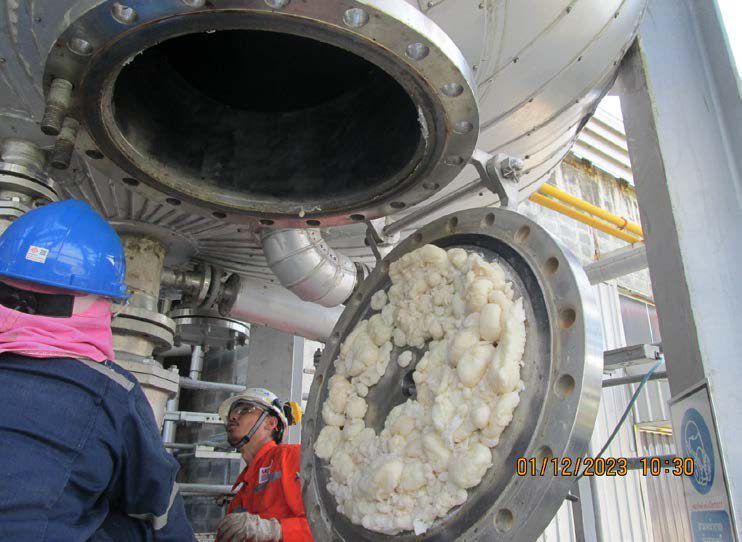
A confined space is large enough to enter but not designed for continuous occupancy and has limited entry/exit — tanks, vessels, sumps, pits and ducts. The danger is the atmosphere: it can be oxygen-deficient, toxic or flammable, and often gives no warning. Most confined-space fatalities are would-be rescuers who rushed in unprotected.

Who is responsible?

Entrant: Works inside, wears the gas detector, exits on alarm.; Standby attendant: Stays at the entry, never enters, raises the alarm and starts rescue.; Entry supervisor: Authorizes entry, verifies tests and the rescue plan.

What are the most common mistakes to avoid?

Entering to rescue without breathing apparatus — the most common cause of multiple fatalities. Single test then entry — atmospheres change; monitor continuously. Using oxygen (not air) to ventilate — raises fire/explosion risk.

References — Company procedure; Thai confined-space regulation; OSH Act B.E. 2554.

Related programs

Questions about our HSE system?

We're happy to share our procedures.