Home/Knowledge/Process analyzer

Process Analyzer Selection

The component picks the technique; then in-situ vs extractive. The sample system is where projects fail.

Back to Knowledge Hub
Quick pick (TL;DR)
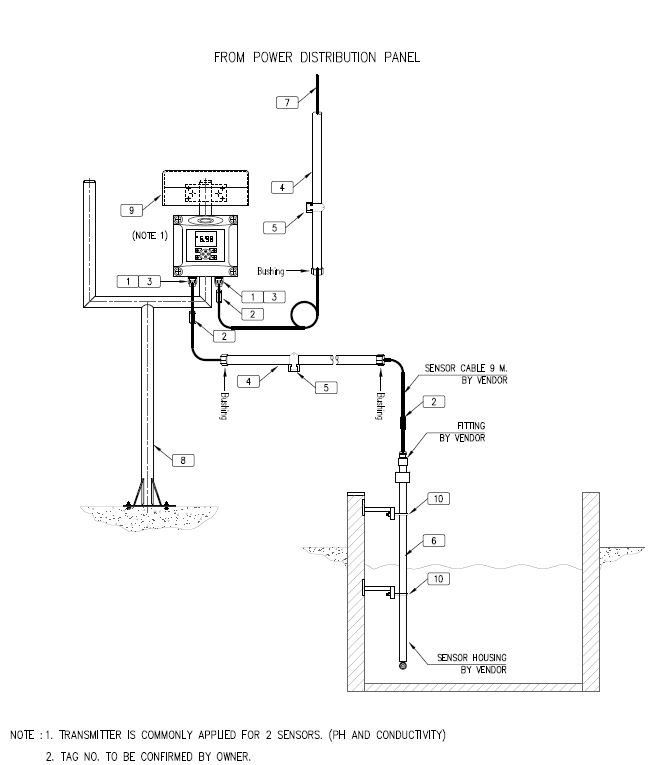
  • Match technique to component: O₂ → zirconia (in-situ, combustion) or paramagnetic; CO/CO₂ → NDIR; H₂O/HC in gas → tunable diode laser (TDLAS); toxic ppm → electrochemical; full composition / custody → gas chromatograph; water → pH / conductivity.
  • Prefer in-situ where possible (fast, no sample loss); extractive needs sample conditioning (filter, cooler, pressure/flow control) — the part that most affects reliability.
  • Plan auto-calibration.

Step 1 — Technique by component

MeasureTechniqueWhy
O₂ (combustion)ZirconiaFast in-situ
CO / CO₂NDIRSelective
H₂O / HCTDLAS (laser)No contact
Toxic ppmElectrochemicalppm
CompositionGCMulti-component

Step 2 — In-situ vs extractive

Combustion O₂ on a stack
Step 1 — Technique measure O₂ in hot flue gas → zirconia cell (in-situ probe) Step 2 — In-situ vs extractive in-situ: fast (≤10 s), no sample loss extractive: only if probe can't survive → choose in-situ zirconia Step 3 — Conditioning & cal in-situ → minimal conditioning auto-calibration with reference gas Answer in-situ zirconia O₂, auto-cal, Ex d

In-situ is fastest; extractive suits GC/dirty streams but the sample system is the reliability risk.

Step 3 — Sample system

  • Design sample conditioning carefully.
  • Auto-cal & validation; CEMS logging.
  • Analyzer house; Ex/purged enclosures.

Common mistakes

  • Under-designed sample system.
  • Wrong technique for the species.
  • No auto-calibration.

Requisition & datasheet

  • Component, application, range.
  • Technique, sampling, cal, output, Ex.

Frequently asked questions

What should I know about Process Analyzer Selection?

Match technique to component: O₂ → zirconia (in-situ, combustion) or paramagnetic; CO/CO₂ → NDIR; H₂O/HC in gas → tunable diode laser (TDLAS); toxic ppm → electrochemical; full composition / custody → gas chromatograph; water → pH / conductivity. Prefer in-situ where possible (fast, no sample loss); extractive needs sample conditioning (filter, cooler, pressure/flow control) — the part that most affects reliability. Plan auto-calibration.

Which standards or codes apply?

EN 14181 / US EPA (CEMS), ASTM analyzer methods, ISA RP76 (sample systems), IEC 60079 (Ex), ISO 10723 (GC).

Standards — EN 14181 / EPA; ASTM; ISA RP76; IEC 60079.

Related guides

Need analyzer design?

We select analyzers & design sample systems / CEMS.