Home/Safety/Excavation & Trenching

Excavation & Trenching

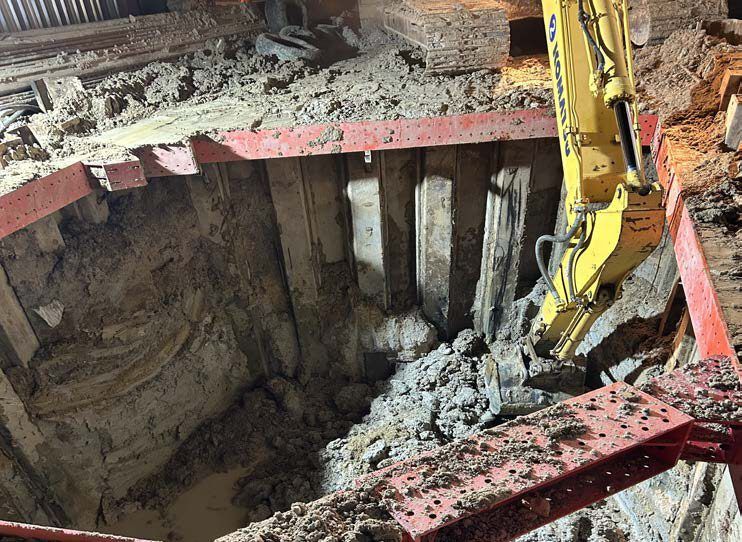
A trench can collapse in seconds — excavation is permit-controlled and protected.

Back to all safety programs

Overview

Hazards: collapse, buried services, falls, and water/gas accumulation — all controlled.

Step-by-step procedure

  1. Obtain a permit; locate underground services.
  2. De-energize/mark services; hand-dig near them.
  3. Prevent collapse — shore, bench or slope the sides.
  4. Keep spoil and plant back from the edge.
  5. Provide safe access/egress (ladder nearby).
  6. Barricade and light it; check atmosphere if deep.
  7. Inspect daily and after rain.

Key controls

  • Protective system for any excavation people enter.
  • Competent-person inspection each shift.
  • Pumps for water ingress; never enter a flooded trench.

Roles & responsibilities

RoleResponsibility
Competent personChecks the protective system and inspects.
Excavator operatorDigs to plan; slows near services.
WorkersUse the ladder; stay clear of the swing radius.

Common mistakes to avoid

  • Entering an unsupported trench 'just for a minute'.
  • Piling spoil at the edge.
  • Machine-digging over unlocated services.

Legal requirements (Thailand)

  • Occupational Safety, Health and Environment Act B.E. 2554 (2011) — the governing workplace-safety law in Thailand.
  • Ministerial Regulation on OSH management for construction work B.E. 2564 (2021).

Frequently asked questions

What is Excavation & Trenching?

The main hazards of excavation are collapse (a cubic metre of soil weighs over a tonne, so even a shallow trench can crush or suffocate), contact with buried electrical cables or gas lines, falling people or plant, and water or gas accumulating in the excavation. Each is controlled before and during digging.

Who is responsible?

Competent person: Designs/checks the protective system and inspects the excavation.; Excavator operator: Digs to plan, slows near marked services.; Workers: Use the access ladder; stay clear of the swing radius.

What are the most common mistakes to avoid?

Entering an unsupported trench 'just for a minute'. Piling spoil at the trench edge, adding load that triggers collapse. Machine-digging blind over unlocated cables or pipes.

References — Company procedure; service-location practice; Thai OSH Act B.E. 2554.

Related programs

Questions about our HSE system?

We're happy to share our procedures.